What is Generative AI: Working, Key Features and Real-World Applications
Artificial Intelligence has transformed the way people interact with technology. From recommendation systems to virtual assistants, AI is being used across different industries to simplify tasks and improve productivity.
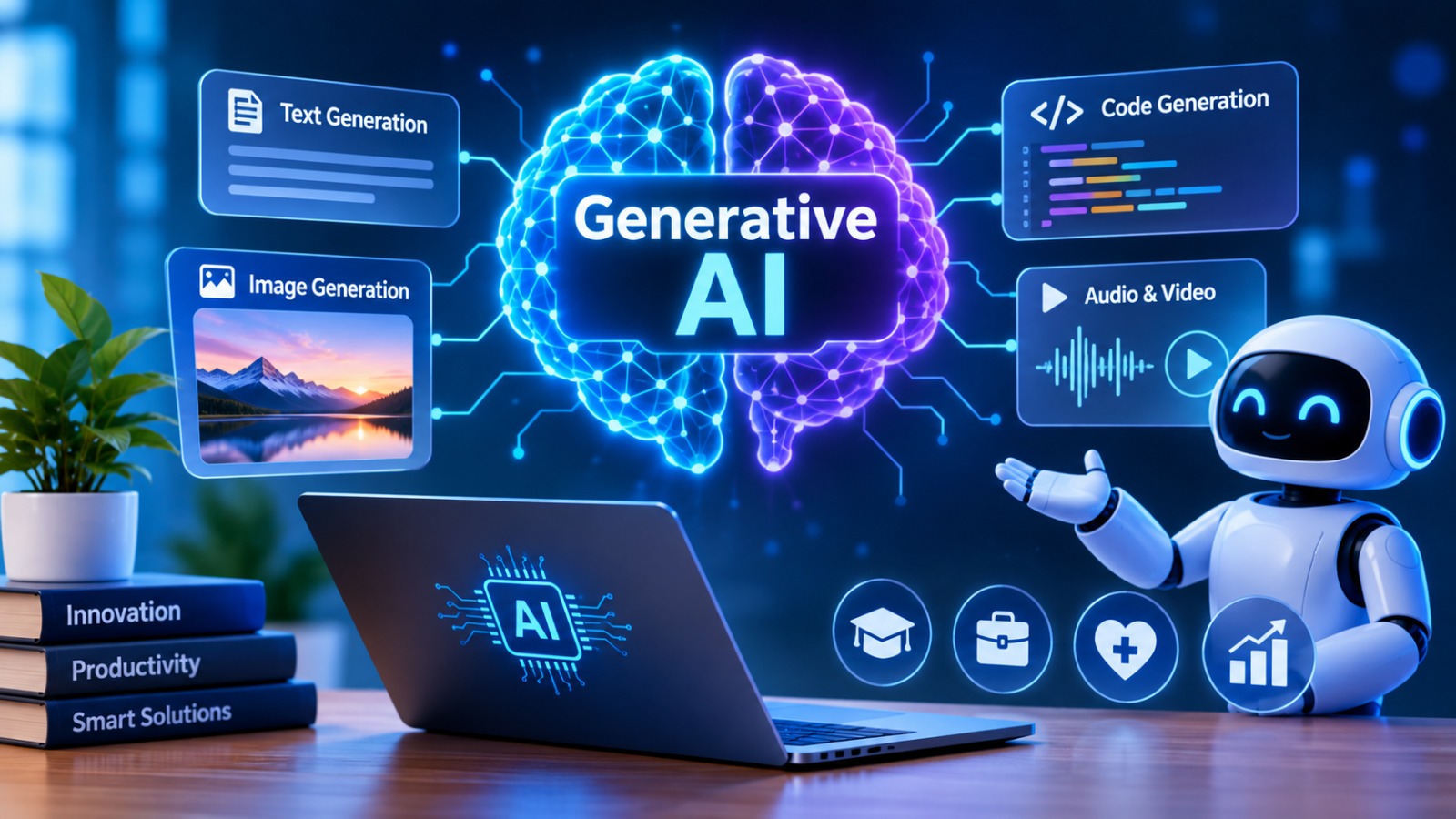
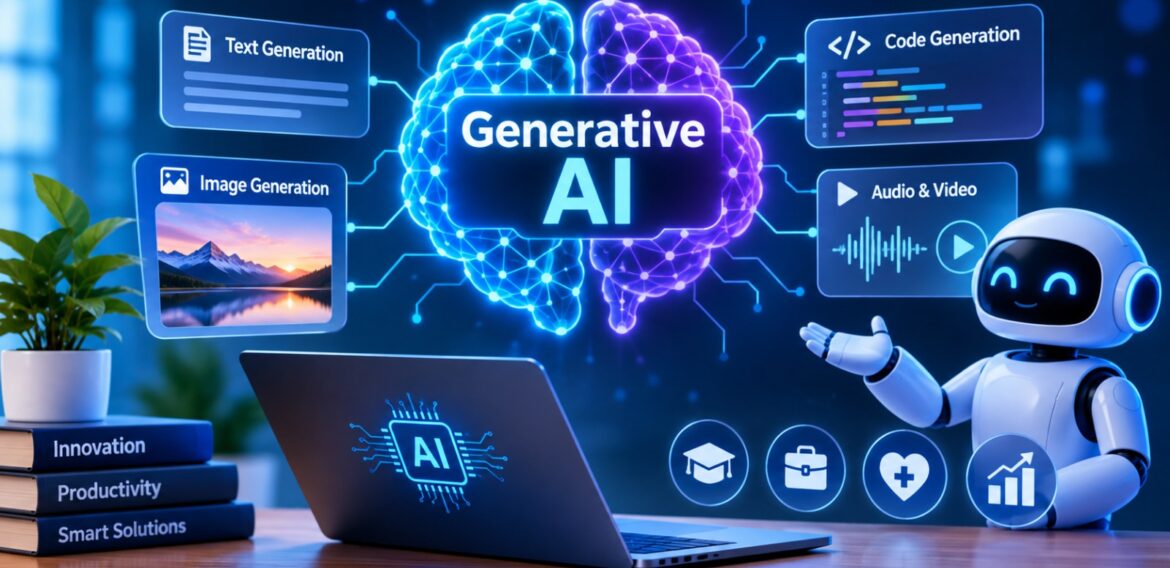
One of the major developments in this field is Generative Artificial Intelligence (Generative AI). It enables machines to create new content, such as text, images, code, audio, and videos, based on user instructions.
Generative AI is changing the way individuals and organizations create content, process information, and perform everyday tasks.
This article explores the concept of Generative AI, its working process, important features, and practical applications.
1. Understanding Generative AI
Generative AI is a branch of Artificial Intelligence that uses trained models to generate new content by learning patterns and relationships from existing data.
For example, when a user asks it to write an email, explain a programming concept, or generate a Python program, the AI system processes the input and produces relevant output.
Some common types of AI-generated content include:
- Text: Articles, emails, reports, and summaries.
- Images: Illustrations, designs, and digital artwork.
- Code: Programs, functions, and code explanations.
- Audio and Video: Speech, music, and video content.
2. Traditional Automation, Predictive AI and Generative AI
Traditional automation, predictive AI, and Generative AI serve different purposes.
| Technology | Main Purpose | Example |
|---|---|---|
| Traditional Automation | Performs predefined tasks using fixed rules | Sending automatic emails |
| Predictive AI | Uses historical data to predict outcomes | Predicting customer behavior |
| Generative AI | Creates new content based on instructions | Generating articles or code |
While traditional automation follows predefined rules and predictive AI focuses on forecasting, Generative AI creates new content using patterns learned during training.
3. How Generative AI Works

Generative AI works through models trained on large amounts of data. These models learn patterns and relationships that help them generate new content.
Large Language Models (LLMs) are commonly used for text generation. Their working process can be explained through the following steps:
Step 1: User Input
The process begins when a user provides an instruction or prompt to the AI system.
Step 2: Input Processing
The system converts the input into smaller units called tokens, which help the model process the information.
Step 3: Pattern Recognition
The model uses patterns and relationships learned during training to understand the context and predict suitable output.
Step 4: Content Generation
The model generates content by predicting the next token in a sequence until the response is completed.
Step 5: Output Delivery
The generated result is presented to the user in the required format, such as text, code, or another supported form of content.
4. Key Features of Generative AI
Generative AI offers several features that make it useful across different fields.
- Content Generation: Creates articles, emails, reports, summaries, and creative content.
- Natural Language Interaction: Allows users to communicate through everyday language.
- Code Generation: Helps developers write code, understand programming concepts, and identify errors.
- Summarization: Converts lengthy information into shorter and more understandable summaries.
- Context Awareness: Uses available conversation context to generate relevant responses.
- Multiple Content Formats: Supports the generation of text, images, audio, video, and other forms of content, depending on the model.
5. Real-World Applications of Generative AI
Generative AI is being used in several industries to improve productivity and simplify tasks.
Education: Helps students understand complex topics, summarize study materials, and generate practice questions.
Software Development: Assists developers in writing code, debugging errors, and preparing technical documentation.
Business: Supports report preparation, email drafting, meeting summaries, and presentation creation.
Healthcare: Helps summarize medical literature, prepare administrative documents, and support information analysis under professional supervision.
Customer Support: Generates responses to common customer queries and assists support teams in managing conversations.
Marketing: Helps create product descriptions, promotional content, campaign ideas, and visual concepts.
6. Limitations of Generative AI
Despite its capabilities, Generative AI has certain limitations that users should consider.
- Hallucinations: It may generate incorrect information that appears convincing.
- Outdated Information: Its knowledge may not always include the latest developments.
- Bias: Generated results may reflect biases present in training data.
- Privacy Concerns: Sharing confidential or sensitive information can create security risks.
- Accuracy: AI-generated responses may contain errors and require human verification.
Understanding these limitations is important for using Generative AI responsibly.
Conclusion
Generative AI is an important development in Artificial Intelligence that enables machines to create new content using learned patterns and user instructions. Its applications across education, software development, business, healthcare, and marketing demonstrate its growing importance.
As this technology continues to develop, understanding its working process, capabilities, and limitations will help individuals and organizations use it more effectively.
If you really liked the article, share it with others and help them explore the world of Generative AI.