The RGCCO Framework: A Simple Approach to Effective Prompt Engineering
AI tools like Claude can help with writing, research, brainstorming, and many other everyday tasks. However, the quality of their responses often depends on how clearly we communicate our requirements.
This is where Prompt Engineering becomes important. It is the process of designing clear and well-structured instructions so that an AI tool can understand what we need and generate a more relevant response.
A prompt should be treated like a work brief: the more clearly we explain the task, the better the AI can understand our expectations.
Why Effective Prompts Matter
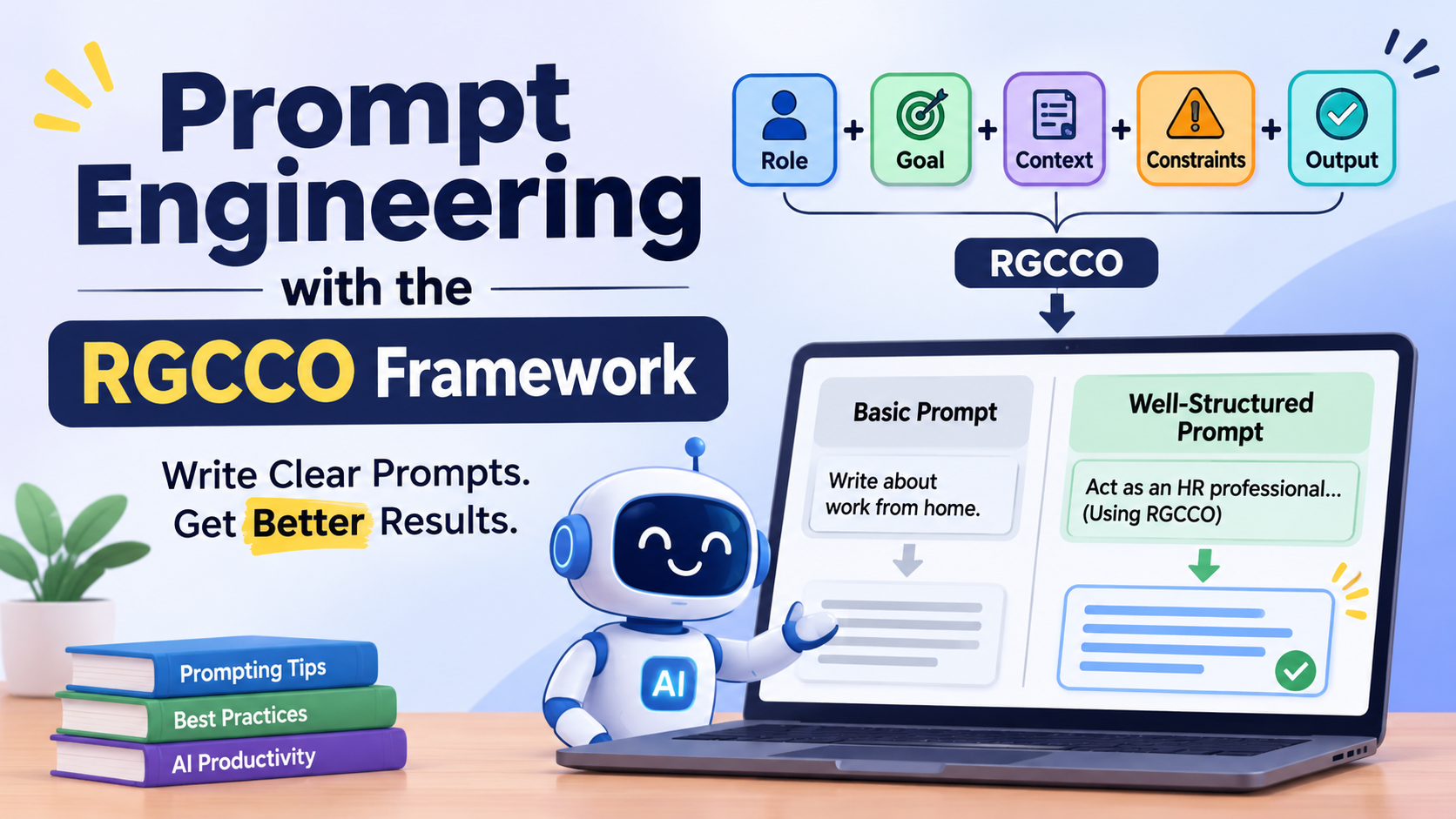
Consider these two prompts:
Weak Prompt:
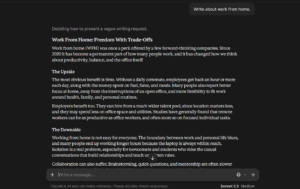
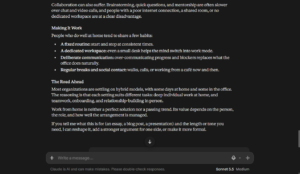
Write about work from home.
Output :
More Effective Prompt:
Act as an HR professional. Draft an announcement for employees explaining the company’s new hybrid work policy. Keep the language professional and friendly, highlight the key changes, and make the announcement easy to understand.
Output:
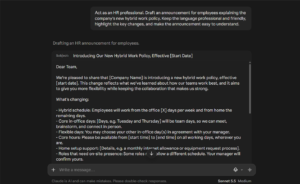
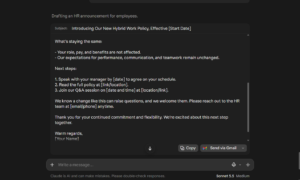
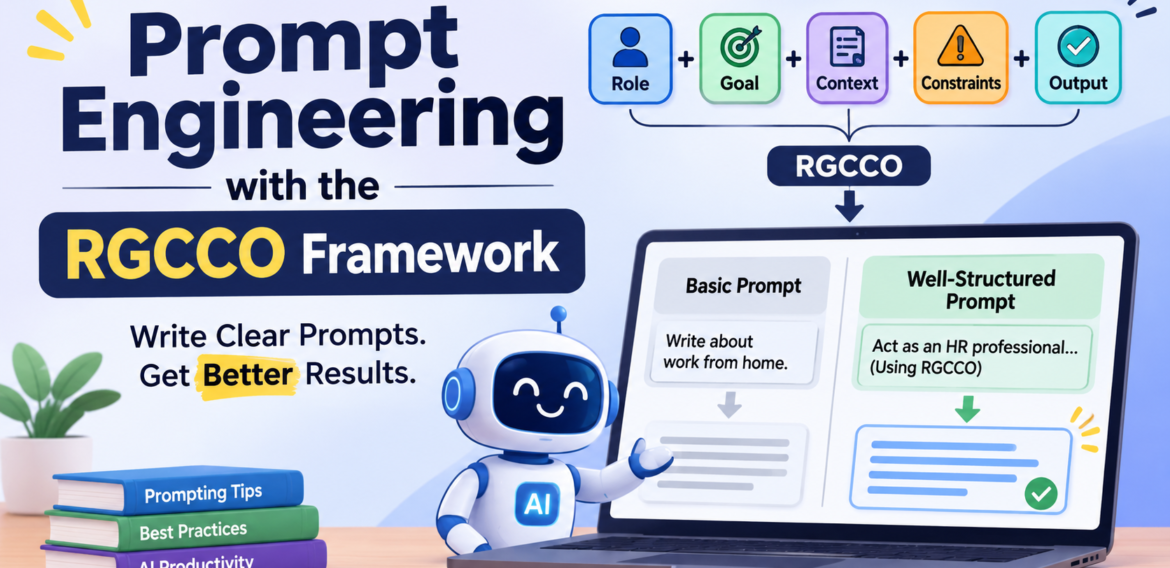
Both prompts are about the same topic, but the second provides a clear role, task, and expectations. This gives the AI more direction and reduces the chances of receiving a vague or irrelevant response.
To structure prompts more effectively, we can use the RGCCO framework.
Understanding the RGCCO Framework
RGCCO stands for Role, Goal, Context, Constraints, and Output. These five elements help us organize our instructions and communicate exactly what we expect from an AI tool.
1. Role
Tell the AI who it should act as. Assigning a role helps establish the perspective or expertise required for the task.
Example: “Act as an experienced HR professional.”
2. Goal
Clearly explain what you want the AI to accomplish. Be specific about the task instead of using general instructions.
Example: “Draft an announcement informing employees about a change in the company’s work policy.”
3. Context
Provide the background information the AI needs to understand the situation. This may include relevant details, audience information, or supporting material.
Example: “The company is introducing a hybrid work policy that requires employees to work from the office three days a week.”
4. Constraints
Mention the conditions or limitations the AI should follow. These may include word limits, tone, language, or information that should be avoided.
Example: “Keep the announcement under 250 words, use a professional but friendly tone, and avoid unnecessary technical language.”
5. Output
Specify how you want the final response to be presented. This helps the AI organize the information in a useful format.
Example: “Present the announcement with a suitable subject line followed by three short paragraphs.”
Putting RGCCO into Practice
Let’s combine all five elements into one prompt.
Example Prompt:
Act as an experienced HR professional. Draft an announcement informing employees about the company’s new hybrid work policy. The company is introducing a policy that requires employees to work from the office three days a week. Keep the announcement under 250 words, use a professional but friendly tone, and make the information easy to understand. Present the response with a suitable subject line followed by three short paragraphs.
This prompt includes all five RGCCO elements:
- Role: Experienced HR professional
- Goal: Draft an employee announcement
- Context: New hybrid work policy requiring three office days
- Constraints: Under 250 words, professional and friendly tone
- Output: Subject line and three short paragraphs
By including these details, we give the AI a clearer understanding of the task and the response we expect.
Best Practices for Writing Effective Prompts
A few simple practices can make prompts more useful:
- Be specific: Clearly describe what you want instead of giving vague instructions.
- Provide relevant context: Include the background information needed to complete the task.
- Set clear expectations: Mention important limits, tone, and requirements.
- Define the output: Specify whether you need a paragraph, list, table, email, or another format.
- Review the response: Check whether the generated content meets your requirements before using it.
Conclusion
Prompt Engineering is not about using complicated words or writing lengthy instructions. It is about communicating clearly and providing the right information.
The RGCCO framework offers a simple way to structure prompts by covering the role, goal, context, constraints, and expected output. With practice, these elements can help us interact with AI tools more effectively and get responses that are closer to what we actually need.
If you would like to understand the basics of Generative AI, how it works, its key features, and its real-world applications, you can explore our previous article: What Is Generative AI? Working, Key Features, and Real-World Applications.